


Stem-Cell Therapy for Type 1 Diabetes: Why Measuring What Matters Is the Next Frontier
A new commentary published in Nature Medicine —
“Adults with type 1 diabetes define what matters to them in stem-cell derived islet cell therapy” — calls for a shift in how emerging therapies are evaluated.
The science behind stem-cell–derived islet cell therapy is advancing quickly. Clinical trials are showing promising results, including insulin independence for some participants.
But as this publication argues, the question is not only whether these therapies lower A1c. The question is whether they change people’s lives in ways that matter.
Read the full publication here.
Stem-Cell–Derived Islet Therapy and the Limits of Traditional Diabetes Outcomes
Stem-cell–derived islet therapies aim to restore endogenous insulin production. Larger trials are underway, and regulatory review is on the horizon.
Historically, diabetes treatments have been evaluated using metrics such as:
- Hemoglobin A1c
- Time in range
- Severe hypoglycemia
These measures are important. But they do not capture what many adults living with type 1 diabetes describe as transformative.
Lower glucose variability matters.
But so does sleeping through the night without fear.
So does no longer planning every meal, every trip, every swim around insulin dosing and device management.
When therapies evolve, evaluation frameworks must evolve with them.
What Adults Living With Type 1 Diabetes Say Matters Most
The PROMISE workshop brought together clinicians, researchers, regulatory experts, and adults living with type 1 diabetes to define meaningful outcomes for stem-cell–derived islet therapy.
Participants described changes that extended far beyond glycemic control:
- Freedom and spontaneity in daily life
- Reduced cognitive burden
- Relief from constant decision-making
- Fewer visible devices
- Less fear during sleep
- Reduced impact on family members
One participant described post-transplant life as “the freedom I never dreamt of.”
These are measurable experiences. But they require intentional tools to capture them.
Without fit-for-purpose person-reported outcome measures, these dimensions risk being invisible in regulatory and reimbursement decisions.

Peter Senior, Linxi Mytkolli and Kitty Shephard pictured at ATTD 2025 PROMISE workshop.
Diabetes Action Canada’s Role in Advancing Patient-Engaged Cell Therapy Research
Diabetes Action Canada has played a direct role in shaping this work.
Linxi Mytkolli, Director of Patient Engagement at DAC, co-facilitated the PROMISE workshop and is a co-author on the publication.
Peter Senior, DAC member and clinician-scientist, was a leading driver for the workshop and is also a co-author.
Kitty Shepherd and Kathleen Gibson, both DAC patient partners, contributed directly to the discussions at the ATTD Conference in Amsterdam.
In addition, fourteen DAC patient partners who have received cell transplants submitted written testimonies ahead of the workshop. Their reflections informed the facilitation design and were synthesized into a one-page insight summary distributed to all attendees. These lived experience narratives anchored the conversation in real-world impact.
This patient-engaged approach did not begin or end with a single meeting.
DAC presented this work at d-Data in Chicago last summer.
It was also featured through our Research-to-Action Fellowship at the Diabetes Canada conference in November.
We have dedicated an entire Fellowship project to cell therapy and lived experience, led by Alex St John and Emily Burke-Hall, with knowledge mobilization outputs forthcoming.

Peter Senior and Esther Latres, SVP of Research at Breakthrough T1D, authors of the PROMISE workshop and paper, pictured at dData 2025 in Chicago.
Why Patient-Reported Outcomes Matter for Stem-Cell Therapy Approval and Access
Regulators must determine whether benefits outweigh risks. If the benefits that matter most to people living with type 1 diabetes are not measured rigorously and consistently, they may not carry weight in formal decision-making.
Measurement influences:
- Regulatory approval
- Reimbursement and coverage
- Health technology assessment
- Access and equity
This commentary calls for:
- Consensus-driven conceptual models of what matters to adults living with type 1 diabetes
- Modern, strengths-based person-reported outcome measures
- Reduced response burden
- Global collaboration to ensure validity and comparability
Innovation in stem-cell biology must be matched by innovation in evaluation science.
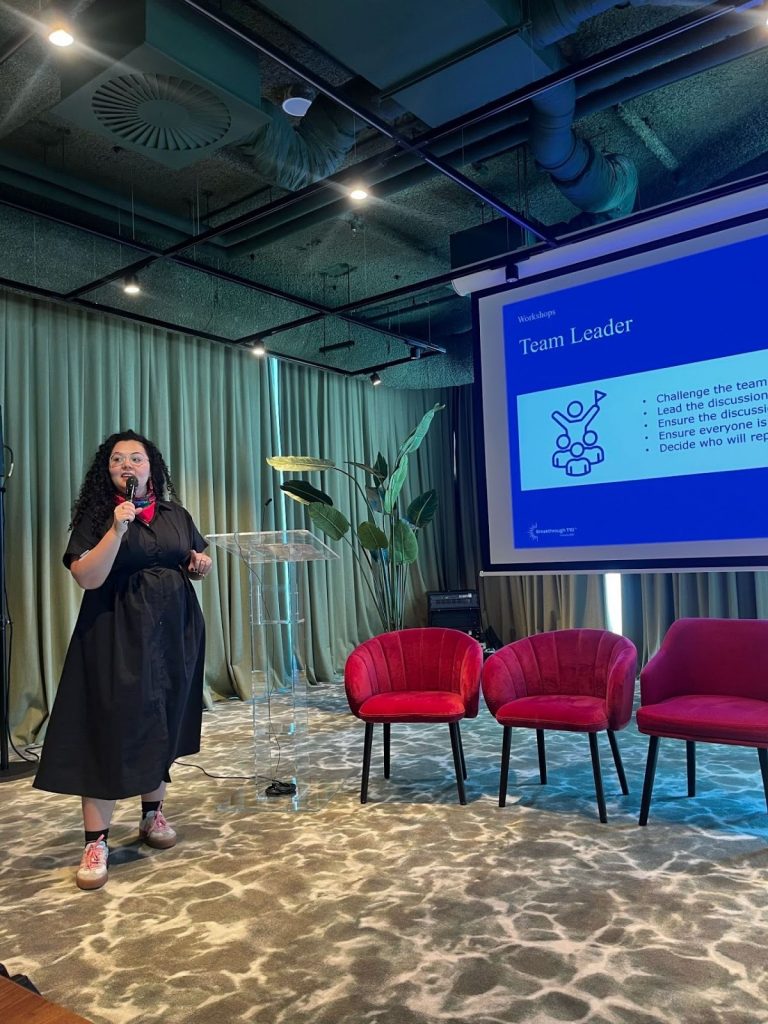
Linxi Mytkolli facilitating at ATTD 2025 PROMISE workshop.
Looking Ahead: Continuing the Conversation on Cell Therapy and Lived Experience
This work continues.
This spring, insights from DAC’s patient-engaged cell therapy initiatives will be shared at the End Diabetes Stigma Global Summit, where Alex and Linxi will present findings from our Fellowship project.
As stem-cell–derived islet therapies move closer to clinical reality, DAC remains committed to ensuring that lived experience shapes how these therapies are assessed, approved, and implemented.
Progress in diabetes care should not be defined by glucose metrics alone.
It should be defined by whether people can live more freely, safely, and fully.


